What should be considered when installing interior doors?
When installing interior doors, many homeowners, contractors, and developers focus mainly on the door style and material, but proper installation is equally important for long-term performance. Incorrect installation can lead to problems such as deformation, poor sound insulation, loose hardware, or reduced service life. At Chantadoor, a professional manufacturer specializing in door research, development, production, and global sales, we understand that high-quality doors require professional installation standards to achieve optimal performance.
One of the first considerations is accurate measurement. Industry research shows that nearly 30% of interior door installation problems are caused by incorrect size measurements before installation. Door openings should be carefully checked for:
* Width and height accuracy
* Wall thickness compatibility
* Floor level consistency
* Vertical alignment of the frame
Even a small deviation can affect the opening and closing performance of the door.
Environmental conditions are another critical factor. Interior doors, especially engineered wood or solid-core doors, can be affected by humidity and temperature changes. Construction studies indicate that indoor humidity above 70% significantly increases the risk of swelling or warping. This is why doors should only be installed after:
* Flooring is completed
* Wet construction work is finished
* Indoor humidity is stabilized
* Proper ventilation is available
At Chantadoor, our paint-free and engineered doors are produced with moisture-controlled technology to improve dimensional stability, but proper installation conditions remain essential for long-term durability.
Door frame installation also directly affects structural performance. Research shows that improperly aligned door frames are responsible for nearly 40% of operational issues such as uneven gaps, friction, and poor sealing. Installers should ensure:
* The frame is level and plumb
* Expansion gaps are evenly distributed
* Anchoring points are secure
* Foam or sealing materials are correctly applied
For soundproof or solid-core doors, sealing performance is especially important. Studies show that air gaps around the door perimeter can reduce acoustic performance by up to 50%, even when using high-quality solid-core doors. This is why professional installation should include:
* Precision fitting
* Quality seal strips
* Stable hinges and locking systems
Hardware selection is another important consideration. Heavy solid-core doors require stronger hinges and durable locking systems. Industry data indicates that low-quality hardware is one of the leading causes of premature door sagging and operational failure. At Chantadoor, we recommend matching hardware specifications with the door weight and application environment.
The installation environment should also match the door material. For example:
* Bathrooms and kitchens require moisture-resistant doors
* Hotels and offices often need soundproof solid-core structures
* High-traffic commercial areas require scratch-resistant finishes
According to market research, paint-free PVC and melamine doors are increasingly preferred in humid environments because they provide better moisture resistance and lower maintenance requirements compared with traditional painted doors.
Another key factor is clearance spacing. Proper spacing between the door and floor helps ensure smooth operation and ventilation. Typical bottom clearance ranges between 8–12 mm depending on flooring type and local standards.
At Chantadoor, we support customers with:
* Technical installation guidance
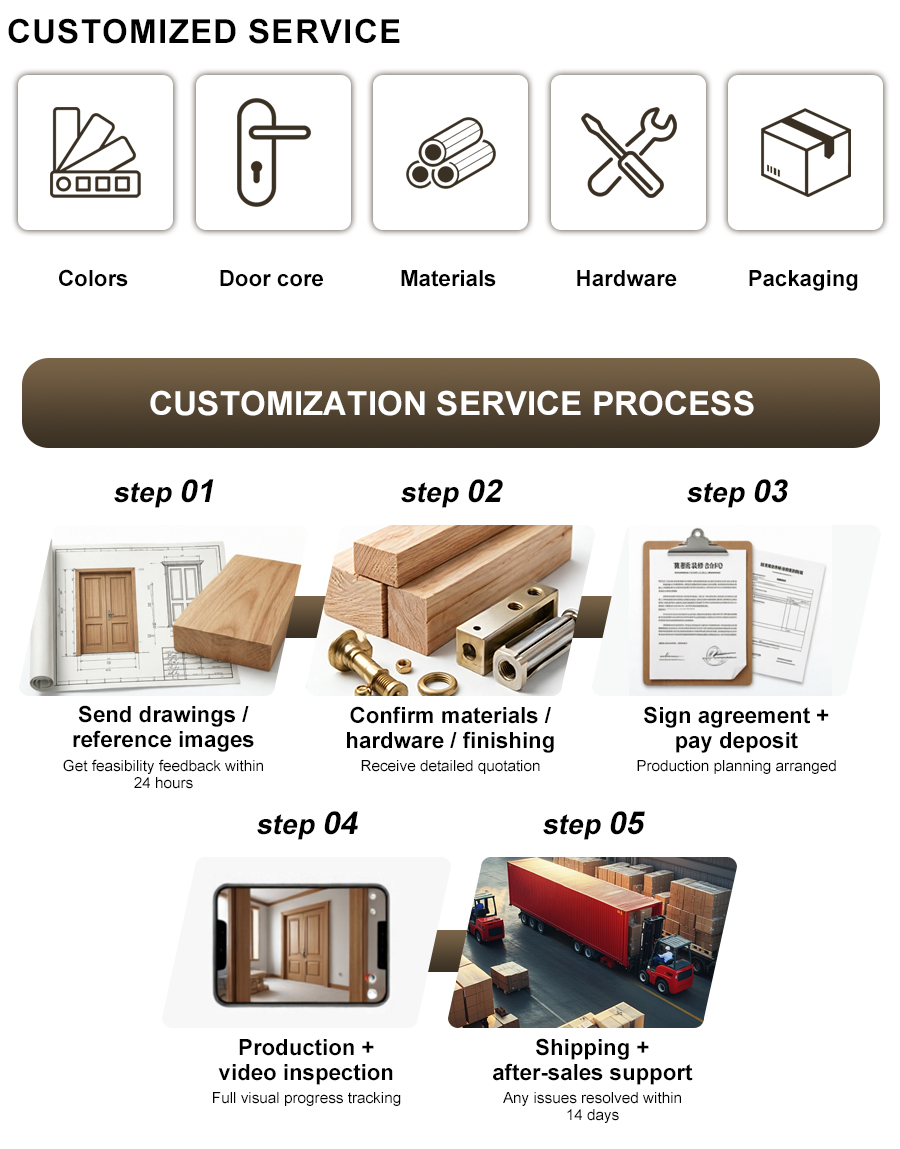
* Customized sizing solutions
* Soundproof and waterproof door systems
* Project-based engineering support
* Precision manufacturing for easier installation
Proper installation not only improves appearance, but also extends product lifespan and reduces future maintenance costs.
So, what should be considered when installing interior doors? The answer includes accurate measurement, environmental control, frame alignment, hardware quality, sealing performance, and proper material selection. At Chantadoor, we combine advanced manufacturing technology with professional technical support to help customers achieve durable, stable, and high-performance interior door installations for residential and commercial projects worldwide.